On a Thursday afternoon in January 2024, I had three vendor quotes spread across my desk, and they weren't for the same thing. One was for LED grow lights for our greenhouse. One was for replacing recessed lighting in the east wing of our office. One was for a light wall and a handful of spotlights in our visitor center.
Eight years into facilities procurement, I'd gotten used to juggling vendors. This was the first time one project landed three different lighting categories on my plate at once.
How we got here
I'm the office administrator for a 140-person horticulture technology company. I manage all facilities procurement—roughly $400,000 a year across 11 vendors. I report to both operations and finance, which means anyone asking me to "just order it" also has to sit through a five-minute conversation about invoicing.
In October 2023, our board approved Phase 2 of a facilities upgrade: expand the greenhouse growing area, renovate the east wing, and refresh the visitor center. The budget was tight. The timeline was tighter. I had until mid-February to lock in quotes, signatures, and delivery dates.
The greenhouse part was straightforward on paper. We'd been running high-pressure sodium fixtures for years, and the operations director had already pushed for LED. The office and visitor center parts were the wildcards—both involved fixtures I'd never had to buy in the same breath as grow lights.
The greenhouse: Fluence SPYDR vs. the field
For the grow lights, I looked at three suppliers. Fluence was the name that kept coming up in our internal conversations—specifically the SPYDR 2i line. The operations director had used the older SPYDR series at a previous job and trusted it.
I'll be honest: I'm not a horticulture engineer. I had to learn enough to ask decent questions. I asked about PPFD numbers, spectrum consistency, and whether the fixtures appeared on the DesignLights Consortium's Horticultural Qualified Products List. The DLC listing mattered to me because it gave me a third-party reference point—something I could point finance to besides a vendor's own marketing sheet. I also checked that the fixtures carried UL 8800 certification, which is the safety standard for horticultural lighting systems in the US.
I went back and forth between a cheaper fixture and the Fluence SPYDR for almost two weeks. The cheaper option saved roughly 18% on the unit price. But when I compared the two quotes side by side—same load calculations, same footprint, same expected lifespan—the operating cost gap was small, and the cheaper unit came from a supplier who couldn't give me a clear answer on where their warranty service would actually be handled. Ultimately I chose Fluence because the documentation was clean and the previous field experience was real, not just a case study on a website.
The east wing: recessed lighting and the insulation problem
The east wing had 42 old recessed can lights, the kind that get hot enough to bake a ceiling tile. We were already replacing them, but the contractor flagged something I hadn't thought about: how to insulate around recessed lighting without violating code or voiding the fixture's listing.
Here's what I learned, and I'm paraphrasing from the electrical inspector who reviewed our plans: under NEC 410.116, recessed fixtures that come into contact with thermal insulation need to be rated IC (Insulation Contact). Non-IC-rated fixtures have to maintain clearance from insulation, which usually means a fire-rated enclosure or an air-sealed barrier. If you just stuff insulation around a non-IC can, you've created a fire risk and you've voided the fixture's listing.
This is where I made a classic mistake. One of the electrical subcontractors quoted about $1,200 less than the others, and I assumed the scope was the same. It wasn't. Their quote used non-IC-rated fixtures with a thin barrier, and when our inspector saw it, we had to redo two rooms. Saved $1,200 by picking the cheaper quote. Ended up spending closer to $2,800 on rework and an extra inspection visit. That one stung.
The visitor center: light wall and the right spotlight
Our visitor center had two jobs: display our product history on a feature wall, and give presentations to community groups. A lot of those visitors are retirees—people who farmed or worked in horticulture for decades. That shaped the lighting choice more than I expected.
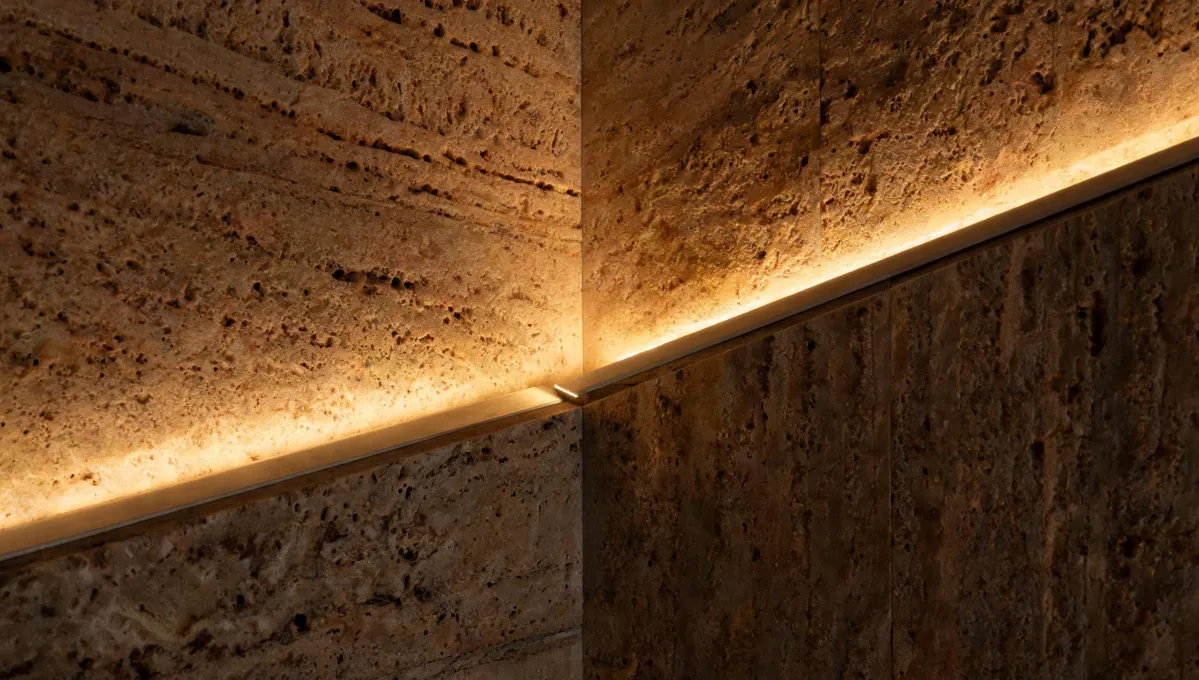
We installed a light wall for the history timeline, and the specification that mattered most was even illumination without harsh hotspots. For the spotlight fixtures, the supplier recommended a senior-friendly setup—higher CRI, lower glare, and adjustable beam angles. I didn't fully understand why the senior spotlight spec matters until one of our vendors explained that older eyes are more sensitive to glare and less able to adapt to sharp light-to-dark transitions. That's not a marketing angle. It's a design consideration that ended up changing what we bought.
The warranty conversation I should have had in writing
In February, I placed orders across all three categories. The greenhouse vendor, who had also handled the office lighting delivery, told me on the phone that the Fluence fixtures came with a standard warranty and that their shop would "take care of anything that comes up." I'd worked with this vendor for two years. I knew I should get that language in writing, but I thought, what are the odds something fails in the first year?
Five months later, two of the greenhouse fixtures developed driver issues, and the office fixtures in the east wing flickered under certain dimming conditions. When I went back to the vendor, the written warranty terms were narrower than the verbal promise. The Fluence warranty itself covered product defects, and it worked as documented. But the install conditions in the east wing and the way the greenhouse fixtures had been wired by the vendor's crew sat outside the standard coverage. The vendor covered part of the repair as a goodwill gesture. The remaining balance came out of my facilities budget.
The cost isn't the main point. The point is that I confirmed something I'd suspected for years but never tested: the vendor who writes down every exclusion before you sign—even if the total looks higher—usually costs less in the end than the one who says "don't worry about it."
What I'd do differently
If I could replay the last twelve months, I'd change three things. First, I'd ask "what's NOT included" before I ask "what's the price" on every quote, every time. Second, I'd require every warranty claim to be in the written proposal, not in a follow-up email or a phone call I "remember." Third, I'd treat insulation work around recessed lighting as a line item with its own spec, not something lumped into a general electrical quote.
To be fair, our budget pressure in late 2023 was real, and I don't regret moving fast. But fast and clear aren't opposites. The vendors who gave me the clearest terms were also the easiest to work with when something went wrong—and that's not a coincidence.
Now, before I place any order over $5,000, I ask two questions: what's the warranty language, and what does this quote exclude? If a vendor can't answer both without a follow-up call, I move to the next one.